
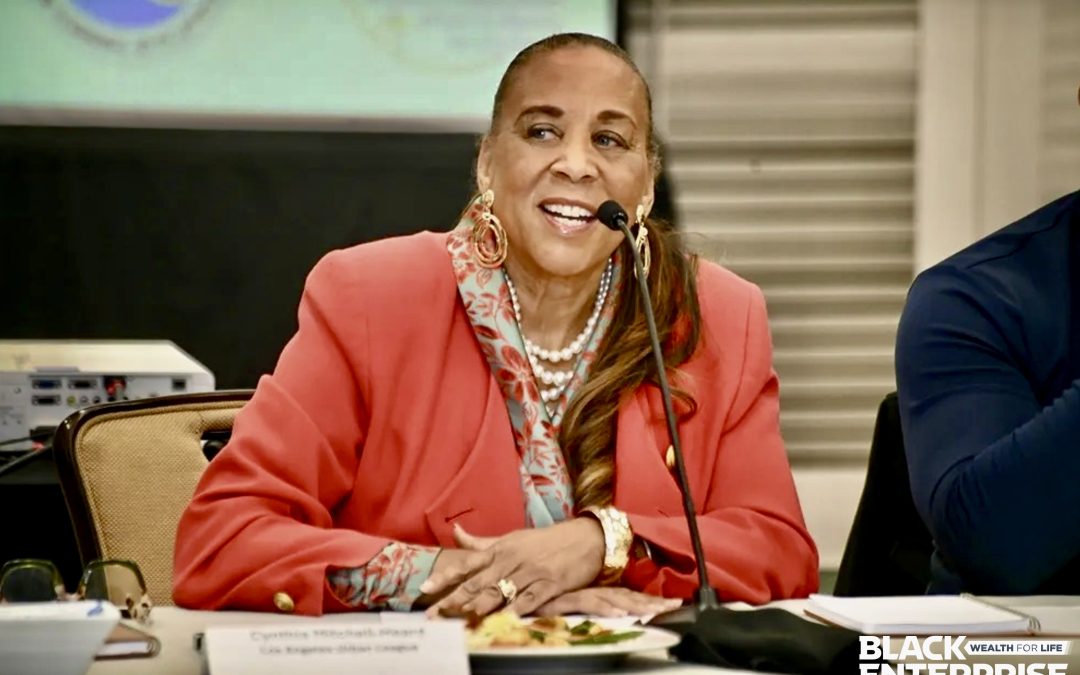
Black Enterprise Community Leaders: Q&A with Cynthia Mitchell-Heard
by Dean Watkins
President & CEO, Los Angeles Urban League
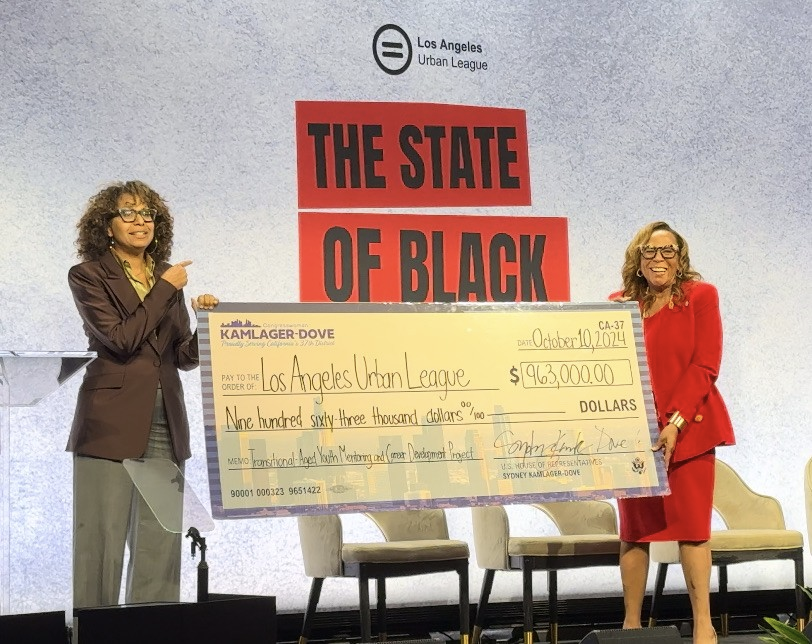
Cynthia Mitchell-Heard is the President and CEO of the Los Angeles Urban League, and the second woman to lead the organization in its more than 100-year history. A native of Los Angeles, she brings over two decades of experience in program development, workforce initiatives, and community engagement. Under her leadership, the League has launched and expanded high-impact programs and initiatives—including the State of Black L.A., a groundbreaking platform that addresses disparities across economics, health, housing, education, and civic engagement. Mitchell-Heard is a passionate advocate for economic equity, racial justice, and generational advancement. She is widely recognized for her ability to implement results-driven strategies, mobilize cross-sector partnerships, and develop scalable solutions that empower underserved communities and build pathways to long-term opportunity.
Mentorship & Workforce Development

1. Empowering the Next Generation
How do you approach mentorship and talent development within the communities you serve?
Mentorship and talent development are at the heart of our mission at the Los Angeles Urban League. We provide multi-tiered support that starts with early exposure and leads to direct career placement. Programs like our Project Ready, NextGen STEM, Biz Institute, and Biz Camp introduce middle and high school students to entrepreneurship, financial literacy, and innovation. Our partnership with Intuit has been instrumental in providing hands-on tech training and mentorship in financial readiness and small business development. We also offer sector-specific workforce training, such as our Construction Career Academy, Backstage Careers, and Urban Capital Readiness Program, ensuring our community members not only gain critical skills but also access to actual economic opportunities.
2. Career Influences
What are the three biggest influences that shaped your approach to program development and economic empowerment?
First, my parents instilled in me a deep sense of service, responsibility, and faith. I grew up in Beverly Hills, but with a front-row seat to community activism—my father especially emphasized giving back and using one’s access to uplift others. Second, my corporate experience shaped my understanding of systems and how economic policy impacts real lives. And third, the stories of those we serve at the Urban League—whether it’s a single mother reentering the workforce or a young man landing a union apprenticeship—those outcomes constantly influence and motivate how we design programs and advocate for equity.
3. Building Inclusive Pipelines
How can Urban League programs help those who don’t follow traditional educational paths?
Many of our community members don’t follow a traditional educational path—and that’s okay. Our job is to ensure that doesn’t mean fewer opportunities. We’ve developed bridge programs that offer alternatives to four-year college, including certification training in IT, construction, digital marketing, and logistics. Through partnerships with LA County, local unions, and corporations like Intuit and SoCal Edison, we connect individuals to real jobs, internships, and apprenticeships. We also work with school districts to catch young people before they fall through the cracks, introducing career pathways as early as middle school.
DEI, Equity, and Economic Empowerment
4. Where DEI Efforts Have Fallen Short
What has gone wrong with corporate DEI, and what must change?
The biggest failure has been performative commitment. After 2020, many corporations launched DEI initiatives, but few had long-term accountability metrics. What’s needed now is a shift from symbolic gestures to structural reform—how corporations hire, promote, spend, and invest. We work with businesses to move beyond statements and into action, such as adopting supplier diversity programs, mentoring Black-led startups, or partnering directly with organizations like ours to develop a long-term talent pipeline.
5. Ensuring Equal Opportunity in DEI
How can DEI efforts translate to real economic advancement?
To ensure equal opportunity truly results in economic advancement, corporations must embed equity into every level of their operations. That means executive accountability, intentional investment in Black talent, and support for Black-owned businesses—not just during Black History Month. Our Black Business Elevation Program helps connect corporations with vetted Black vendors, and our DEI consulting arm works directly with HR leaders to design and implement inclusive hiring strategies that are both measurable and impactful.
6. DEI vs. Black-Focused Programs
Have DEI initiatives become too broad to help Black communities?
There is a real concern that DEI efforts have become too broad and lost focus on the unique challenges facing the Black community. While we embrace coalition-building across all communities of color, it’s vital to preserve and protect programs that are unapologetically Black-focused. Initiatives like our State of Black L.A. and Urban League Young Professionals serve as a platform for these specific conversations and needs. The solution isn’t either/or—it’s both/and: collaborating across groups while ensuring we don’t lose sight of the unique history and ongoing disparities our community continues to face.
Urban League Programs, Transparency & Future Goals
7. Showcasing Impact for Greater Awareness and Support
How do you make sure the Urban League’s impact is visible?
We leverage media partnerships—such as with NBC4/Telemundo 52 and the Los Angeles Sentinel—to broadcast and cover events like our State of Black Los Angeles to a wider audience. We also produce an annual Impact Report that highlights outcomes across employment, health, housing, education, and civic engagement. In moments of crisis, our visibility is equally important—we were some of the first boots on the ground during the January Eaton Fire in Altadena, providing direct relief, assessing damage, and supporting families in need. These actions reinforce why awareness of our work must extend beyond the Black community to include funders, policymakers, and the general public.
8. The Importance of Private Funding
Why is private funding important, and how do you attract it?
Private-sector support is not just helpful—it’s essential. With government funding streams increasingly politicized, corporate partnerships like those with Intuit, Cedars-Sinai, Union Bank, and Wells Fargo allow us to sustain and grow programs. Our strategy focuses on long-term value: we align our impact with a partner’s community investment goals, then demonstrate clear outcomes. What works is not just asking for money—it’s creating authentic, co-branded opportunities that deliver measurable ROI for both the community and the funder.
9. A Program You’re Most Proud Of
Which program are you most proud of and why?
I’m especially proud of our partnership with Intuit, which has allowed us to expand our financial
empowerment and entrepreneurship training programs. Together, we’ve equipped aspiring entrepreneurs and small business owners with tools for financial literacy, business planning, and digital readiness. Cohort one of this program in 2024 served 25 of LA’s most promising business owners. The program worked so well that it expanded to Philadelphia and Atlanta, benefitting 100 young business leaders. In parallel, our Construction Career Academy has placed more than 500 individuals into union-backed jobs—many of whom were formerly incarcerated or long-term unemployed. These programs are transformational and create long-term pathways to generational wealth.
10. Looking Ahead: The Next 365 Days
What’s one major initiative you’re excited about in the coming year?
We’re excited to launch our Black Business Accelerator this year—an intensive program aimed at helping Black-owned businesses access capital, scale operations, and expand their customer base. We’re working with partners like Intuit, US BANK, J.P. Morgan Chase, Comerica, and the U.S. Small Business Administration to ensure these businesses have access to funding, mentorship, and procurement pipelines. We’re also ensuring equitable recovery efforts for survivors of the Eaton Fire and celebrating the promising new class of Biz Institute participants—two of whom won national awards last year.